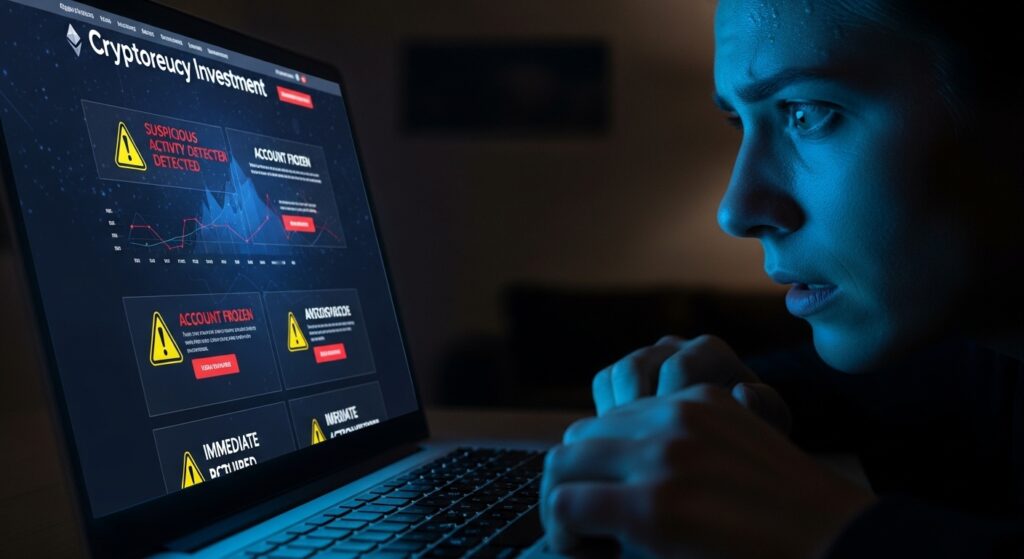
If you are researching bitcoin recovery scams, there is a good chance you have already gone through a painful crypto loss. You may have sent Bitcoin to a scam wallet, lost access after a phishing attack, or been tricked by a fake investment platform. In that situation, it is natural to search for help. But that search creates a second danger: fake recovery services.
Bitcoin recovery scams are among the most harmful follow-up scams in crypto. They target people who have already been victimized once. The scammer knows the victim is stressed, hopeful, and searching for answers. That makes the victim easier to pressure, manipulate, or deceive.
These scams can take many forms. Some pretend to be recovery experts. Some pretend to be law firms. Some claim they work with exchanges. Some say they have already traced your funds. Others promise “blockchain reversal” or “wallet unlock” services that do not actually exist. Their goal is simple: get money, data, or wallet access from the victim.
This guide explains bitcoin recovery scams in full detail. It covers how they work, why they are so common, the warning signs to watch for, the tricks they use, what a legitimate service looks like, and how to protect yourself from being scammed again.
Loosing crypto doesn’t always mean its gone forever. If you are trying to recover stolen Bitcoin, acting quickly can improve your chances. At Crypto Recovery Minions we specialize in tracking and tracing Digital Assets across the Blockchain using advanced blockchain tracking tools similar to Etherscan (https://etherscan.io) and proven recovery methods to help trace stolen funds and support victims through the process. To get expert assistance and start your recovery, visit https://cryptorecoveryminions.com.
What Are Bitcoin Recovery Scams?
Bitcoin recovery scams are fraudulent services or individuals who claim they can recover lost or stolen crypto but are actually trying to steal more money or information from the victim.
These scams usually appear after a person has already lost crypto. The scammer may find the victim through:
- public posts asking for help
- online forums
- comment sections
- social media messages
- fake search engine ads
- websites targeting crypto scam victims
The scammer then offers help with promises such as:
- “We can recover your stolen Bitcoin.”
- “We already traced the wallet.”
- “We work with blockchain authorities.”
- “We guarantee your funds back.”
- “We just need an activation fee.”
What makes these scams dangerous is that they often sound believable. They use technical language, legal words, and urgent messaging to create trust.
Why Bitcoin Recovery Scams Are So Effective
To avoid bitcoin recovery scams, you need to understand why they work so well.
Victims are emotionally vulnerable
After losing crypto, many people feel panic, regret, embarrassment, anger, and urgency. That emotional state makes it harder to evaluate claims carefully.
The crypto world is technically confusing
Most victims do not know exactly how blockchain tracing works. That makes it easier for fake recovery agents to sound credible.
Victims want certainty
When someone says “we can definitely get your Bitcoin back,” that certainty feels attractive, even if it is false.
Scammers understand timing
Recovery scammers often contact victims quickly, before they have had time to think clearly.
Many scams look professional
Fake websites can include polished design, fake reviews, copied legal text, and technical buzzwords.
Because of this, even smart people can fall for bitcoin recovery scams.
The Most Common Types of Bitcoin Recovery Scams
There is no single recovery scam model. Below are the most common types.
Fake Recovery Expert Scam
This is one of the most widespread models.
The scammer claims to be a crypto recovery expert and says they can track and recover stolen Bitcoin. They may ask for:
- an upfront investigation fee
- a wallet unlock fee
- a tracing activation fee
- a legal documentation fee
Once you pay, they either disappear or invent another fee.
This scam works because it copies the language of real recovery work but removes the real substance.
Advance Fee Scam
This model focuses on extracting payment before doing anything.
The scammer says:
- “Your Bitcoin has already been located.”
- “We just need the release fee.”
- “The recovered funds are waiting.”
- “Pay the transfer charge and we will release it.”
The victim pays, but the funds never appear.
Then the scammer often asks for more money:
- compliance fee
- anti-money laundering fee
- blockchain clearance fee
- tax processing fee
It becomes an endless chain.
Seed Phrase Theft Scam
This is one of the most dangerous forms because it aims directly at your wallet access.
The fake recovery agent says they need your:
- seed phrase
- private key
- wallet login
- screen share access
They may pretend this is necessary for “verification” or “wallet linking.”
A legitimate recovery service does not need your seed phrase to trace stolen Bitcoin. If you provide it, you risk losing any remaining assets.
Fake Law Firm or Legal Recovery Scam
Some recovery scams pretend to be legal professionals.
They may use:
- legal-sounding website names
- fake attorney photos
- fake bar numbers
- fake court language
They claim they can:
- sue the scammer instantly
- freeze blockchain wallets by court order
- force exchanges to return funds immediately
Then they ask for legal fees or filing fees.
The legal language makes the scam seem more credible, but the underlying promises are often unrealistic or entirely fake.
Fake Exchange Insider Scam
This scammer claims to work inside a major exchange or to have special access to exchange systems.
They may say:
- “I can freeze the scammer’s account.”
- “I know someone in compliance.”
- “We intercepted the funds already.”
Then they ask for a fee to process the recovery.
This scam is powerful because many victims know exchanges can sometimes become recovery points. The scammer exploits that knowledge.
Social Media Recovery Scam
These scams often start in comment sections or direct messages.
A victim posts something like:
“I lost Bitcoin to a scam. Can anyone help?”
Then fake accounts reply:
- “Message this recovery agent.”
- “This hacker recovered my funds.”
- “This expert is trusted.”
These recommendations are often fake testimonials from scam accounts promoting each other.
Search Engine Ad Scam
Some fake recovery services run ads targeting people searching terms like:
- recover stolen bitcoin
- bitcoin recovery expert
- crypto recovery service
The ad leads to a polished but fake site designed to collect leads and money from victims.
A paid ad does not prove trustworthiness. It only proves someone bought ad placement.
The Biggest Warning Signs of Bitcoin Recovery Scams
Knowing the red flags is one of the best defenses.
Guaranteed recovery
No one can guarantee Bitcoin recovery.
Requests for seed phrase or private keys
This is never safe.
Urgent pressure to pay immediately
Scammers want you to act before thinking.
Claims of blockchain reversal
Confirmed Bitcoin transactions cannot simply be reversed.
Vague process
If they cannot clearly explain what they do, be cautious.
Endless extra fees
This is a classic scam pattern.
No real interest in evidence
A scammer may focus more on payment than on transaction details.
Unrealistic speed claims
Statements like “funds recovered in one hour” are usually deceptive.
How Bitcoin Recovery Scams Usually Progress
These scams often follow a pattern.
Step 1: Contact or advertisement
The victim sees the service online or gets approached directly.
Step 2: Fast reassurance
The scammer quickly says recovery is possible, often with high confidence.
Step 3: Technical or legal language
They use words that sound advanced to build authority.
Step 4: Upfront payment demand
They request a fee for activation, tracing, or release.
Step 5: More obstacles appear
After payment, a new fee appears.
Step 6: Disappearance or continued extraction
The scammer either disappears or keeps asking for more money.
Understanding this pattern helps you stop it early.
Why Victims Often Fall for a Second Scam
People sometimes ask why anyone would trust another service after already being scammed. The answer is simple: distress changes judgment.
Victims often feel:
- desperate to fix the loss
- ashamed and unwilling to ask others for advice
- afraid that waiting will reduce recovery chances
- hopeful when someone sounds confident
Scammers know this. They target that emotional state very carefully.
This is why learning about bitcoin recovery scams is not just useful. It is protective.
How to Avoid Bitcoin Recovery Scams
Avoiding these scams requires a practical, step-by-step mindset.
Slow Down Before Responding
The first rule is simple: do not rush.
Scammers depend on emotional urgency. Slowing down helps you think clearly.
Before replying to any recovery service:
- read their claims carefully
- ask what exactly they do
- question anything that sounds too certain
- avoid paying immediately
Slowing down alone can prevent many mistakes.
Never Share Your Seed Phrase or Private Key
This rule should be absolute.
No legitimate tracing service needs:
- your seed phrase
- private keys
- full wallet control
If someone asks for those, stop the conversation.
A recovery service can assess wallet movement with public transaction data such as addresses and TXIDs. It does not need the keys that control your assets.
Ask for a Clear Process Explanation
A legitimate service should be able to explain:
- what information they need
- how tracing works
- what the likely next steps are
- what they can and cannot do
- how fees are structured
If the explanation is vague, magical, or evasive, do not trust it.
Good questions to ask include:
- What do you need to assess my case?
- What does your investigation involve?
- Can you explain your fee structure?
- Do you guarantee recovery?
- Do you need access to my wallet?
The answers matter.
Be Wary of Technical Buzzwords Used as a Sales Tool
Not all technical language is fake. But when technical words are used without clear meaning, that is a warning sign.
Examples of misleading phrases include:
- “blockchain reversal engine”
- “crypto extraction channel”
- “wallet unlock code recovery protocol”
- “transaction cancellation node”
Ask for plain-language explanation. A real service should be able to explain its method clearly without hiding behind jargon.
Treat Testimonials Carefully
Many fake recovery services show fake reviews or social proof.
Be cautious with:
- overly dramatic testimonials
- repeated identical praise
- generic success stories with no detail
- screenshots that can be fabricated
Scammers understand that victims look for reassurance. Fake testimonials are easy to manufacture.
A trustworthy evaluation should rely more on process transparency and safety rules than on emotional testimonials alone.
Watch for Manipulative Payment Tactics
Scam services often use payment pressure.
Examples include:
- “Pay now or the wallet will close.”
- “This recovery window expires today.”
- “The exchange is waiting for your release fee.”
- “The funds are frozen, but only for one hour.”
These tactics are designed to block careful thinking.
A legitimate service may explain that timing matters, but it should not manufacture panic to force payment.
Understand What Real Recovery Looks Like
The best defense against scams is understanding what legitimate recovery generally involves.
A real service may:
- review the transaction and evidence
- trace wallet movement
- map how funds moved
- identify potential exchange exposure
- prepare reports or support escalation
A real service does not:
- guarantee recovery
- ask for your seed phrase
- claim instant reversal of confirmed Bitcoin transactions
- invent endless release fees
The more you understand the difference, the safer you become. Recover stolen Bitcoin
Why Public Help Requests Can Increase Risk
After a scam, many victims go online and post:
- “I was scammed. Who can help me recover my Bitcoin?”
This often attracts recovery scammers immediately.
Public help requests can expose you to:
- fake recovery referrals
- direct-message scammers
- comment spam
- impersonators pretending to help
It is safer to evaluate services carefully rather than trust random recommendations from public threads.
What to Do If You Already Paid a Recovery Scammer
If you already paid a fake recovery service, the most important step is to stop sending more money.
Then:
- save all communication
- save payment details
- save wallet addresses
- save screenshots and receipts
- stop giving more information
- secure your remaining assets if wallet access was shared
The worst next step is continuing because you hope the next fee will fix the problem. That is exactly how advance fee scams keep growing.
How to Compare Recovery Services More Safely
When comparing services, focus on these questions:
Do they explain their method clearly?
Do they avoid guarantees?
Do they avoid requesting private wallet credentials?
Do they show realistic understanding of blockchain limitations?
Are their fees explained in a structured way?
Do they focus on evidence and case details?
A service does not need to sound dramatic to be useful. In fact, the safest services are often the most grounded. Hire a Bitcoin recovery service and learn How it Works
Why Education Is the Best Protection Against Recovery Scams
Bitcoin recovery scams thrive on confusion. Education reduces that confusion.
When you understand:
- what blockchain tracing can do
- what it cannot do
- what information is safe to share
- what claims are unrealistic
- what fee patterns are suspicious
you become harder to manipulate.
This is especially important in crypto because there is no single customer support system for the entire ecosystem. Users often have to protect themselves with knowledge first.
Key Rules to Remember
If you want a simple checklist, remember these rules:
- Never trust guaranteed recovery claims
- Never share your seed phrase or private keys
- Never let urgency force payment
- Never assume a professional-looking website is enough
- Always ask for a clear process explanation
- Always be cautious of repeated extra fees
- Always focus on evidence and realistic expectations
These rules will not solve every problem, but they will reduce your chances of being victimized again.
Loosing crypto doesn’t always mean its gone forever. If you are trying to recover stolen Bitcoin, acting quickly can improve your chances. At Crypto Recovery Minions we specialize in tracking and tracing Digital Assets across the Blockchain using advanced blockchain tracking tools similar to Etherscan (https://etherscan.io) and proven recovery methods to help trace stolen funds and support victims through the process. To get expert assistance and start your recovery, visit https://cryptorecoveryminions.com.
Final Thoughts
Bitcoin recovery scams are dangerous because they prey on people at their most vulnerable moment. After losing crypto once, many victims just want a solution. Scammers know that, and they build fake recovery offers around urgency, confidence, and technical confusion.
The safest response is not blind trust. It is structured caution.
A fake recovery service often promises certainty, asks for dangerous information, demands fast payment, and invents reasons for more fees. A legitimate service, by contrast, explains its process, sets realistic expectations, respects wallet security, and focuses on evidence rather than manipulation.
If you remember one idea from this guide, let it be this:
the desire to recover quickly should never be stronger than the need to stay safe.
That principle can protect you from turning one crypto loss into a second one